Semester after semester, students fret about their college textbook expenses, which average about $300 or more for full-time students. Many students are concerned about the big prices they pay and the little returns they get during buy-back time.
David Rosales, a sophomore majoring in Education, knows all too well about the raw deal he gets on his books. “My math book for college algebra cost me $100 and I only got $50 back, and my friend only got like $20 or $30,” said Rosales.
Rosales isn’t the only one to feel the sting of high book prices. In fact, every student goes through it, up until his or her last semester of college.
Many Palo Alto students buy
their books on campus at our college bookstore, which is owned by Texas
Book Company. This company has a contract with the Alamo Community
College District, and the contract plainly states issues like the buy-back
policy and how they obtain textbooks.
The buy-back policy is
posted on the wall behind the cashier, and the policy states that the
bookstore is to buy back textbooks at one-half of what the student originally
paid for it, provided the bookstore has received a letter of adoption
from professors saying they will be using the text the next semester.
When the store reaches its quota in books, the buy-back price will drop to a listed price set by the national wholesale market. Used book companies will then buy those unused books at that discounted price. The used book company, in this case, is like a mortuary for books.
The listed price is also used throughout the semester until our professors submit their book list or adoption list. When this happens, some students will get much less than half of what they paid for their books and others will get nothing.
“Professors know if they are going to continue using a book or not, so why don’t they let us know? It would help save us money,” said Lora Mendiola, a freshman majoring in Business Management
Both students and the bookstore have to wait for the professors before book prices and buy-back prices can be set. According to the contract, the professors are to have submitted their list for spring of 2004, by Nov. 1, 2003. According to Rippe the bookstore might not get some professors list, until weeks after the semester is over. This delay can cause major problems for students at buy-back time, because now the bookstore has to go by the national wholesale market price.
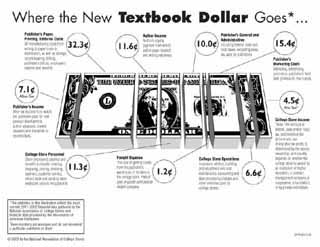
New books can more expensive than the used books because the bookstore itself has a lot more money going into obtaining the book. When a professor decides they want a new textbook for their course, the bookstore has to then order the new book. The price of the new order is called a publisher’s expense.
“A new book doesn’t just cost more to the student; it also costs more for the bookstore,” said Ron Rippe, Palo Alto College Bookstore Manager.
Out of every new textbook dollar, 77.6 cents is taken out to meet publisher’s expenses. The bookstore, then, receives 22.4 cents of the dollar as their profit.